Industry & technology / Huawei Qiankun
Huawei ADS 5 compared: Max, Pro and SE differ in more than lidar
Huawei’s configuration table separates three hardware packages and three levels of scenario coverage. Parking-space-to-parking-space assistance belongs to Max, while urban NCA and urban LCC are different capabilities. Buyers still need to check the actual vehicle and software release.
Key points
- Max and Pro list urban and campus NCA; SE lists urban lane-centering assistance instead.
- Only Max lists parking-space-to-parking-space assistance and Roaming Cruise Assist in the three-version comparison.
- The platform table does not replace a vehicle specification: some functions require a later OTA, and driver supervision remains necessary.
Reported details
Similar driver-assistance badges can conceal meaningful differences in what a car can do. Huawei Qiankun’s ADS 5 comparison separates the Max, Pro and SE packages into hardware and supported scenarios. The distinction is not simply whether a car has lidar: urban driving and the transitions into parking are also different. For a buyer, the useful question is which journeys need assistance and which capability the chosen vehicle actually supplies.
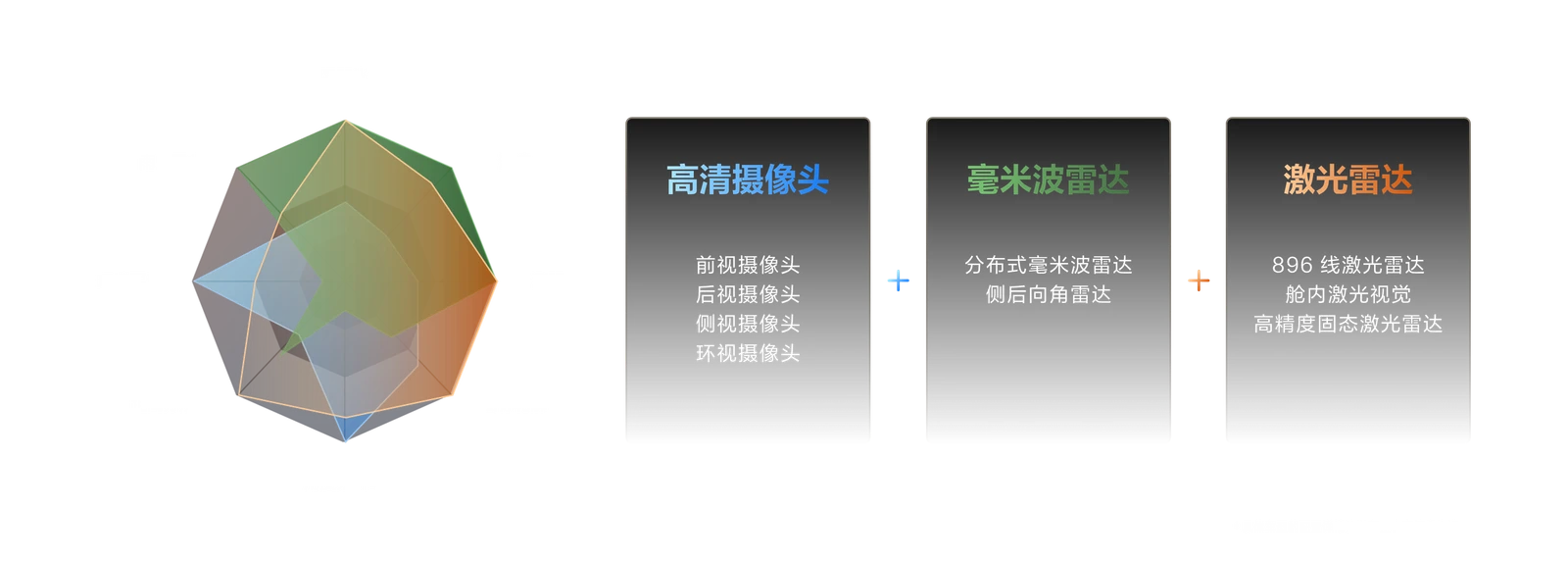
Max lists an 896-line, dual-optical-path imaging lidar and 11 cameras. Its millimeter-wave radar count is three or five, with some arrangements including a distributed radar set; the table also lists zero, three or four high-precision solid-state lidars. Pro uses the in-cabin Limera laser-vision system, 11 cameras and three millimeter-wave radars. SE lists no lidar, ten cameras and three millimeter-wave radars. All three list 12 ultrasonic sensors. The alternative Max arrangements also show why one badge does not guarantee identical sensor placement on every car.
The functional distinction is clearer. All three list highway Navigation Cruise Assist, or NCA. Max and Pro additionally list urban and campus NCA, whereas SE lists urban Lane Cruise Control, or LCC. Huawei treats these as different functions. A claim of urban assistance therefore should not be read as confirmation of the same urban navigation capability across all three versions.
For journey transitions and parking, Max lists Roaming Cruise Assist, parking-space-to-parking-space assistance and parking assistance. Pro and SE also list parking assistance. Huawei labels the Max and Pro safety packages six-dimensional safety and SE’s package basic safety. These are platform capabilities: Huawei says not every vehicle supports every function on the page and some need a later OTA. ADS in current passenger cars remains driver assistance, requiring attention and readiness to intervene.
Editorial interpretation
Editorial analysis: a mainly motorway-based driver sees highway NCA listed under every version, so a higher badge alone does not establish which car is the better purchase. Frequent complex urban trips make the distinction between urban NCA and urban LCC more relevant. Buyers seeking continuity from an origin parking space to a destination parking space have a specific Max feature to investigate. Function names still do not replace the road, weather, speed and operating restrictions in the vehicle manual.
The next purchasing check is the hardware fitted to each trim of the same model, functions enabled at delivery, later OTA plans and associated charges. The platform page does not provide prices, supported cities or a common rollout date for every partner vehicle. Nor does it prove an existing car already has the complete feature set. Matching the sales specification with its software version and official manual turns the platform comparison into information a buyer can act on.
What it means
Independently compiled from Huawei’s current ADS 5 configuration table, accessed on 23 October 2026. The table has no first-update date. This article does not describe a first launch on that date or claim a road test.
Official source
Huawei Qiankun Intelligent Automotive Solutions ↗Reviewed: